
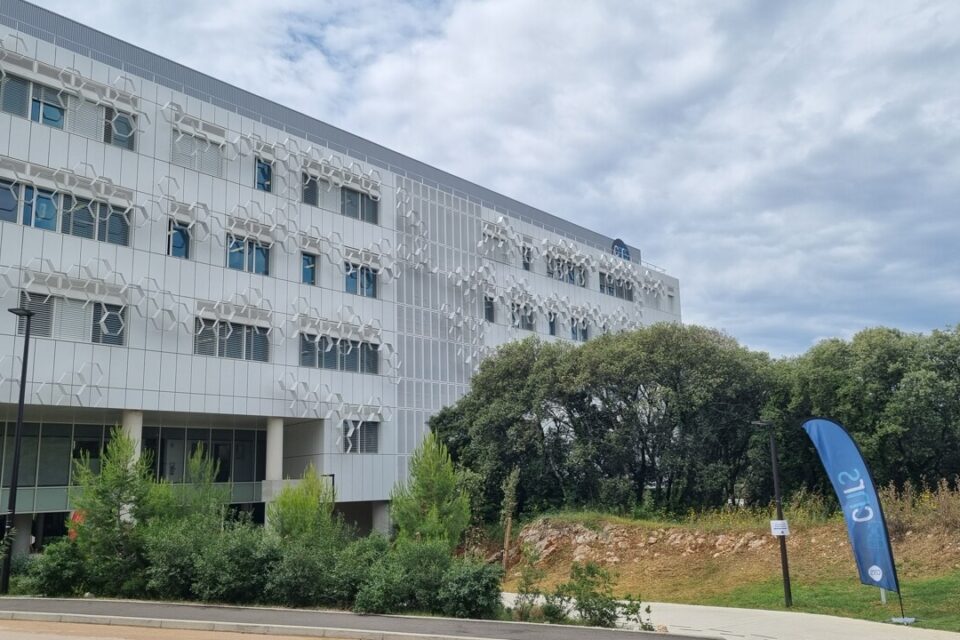
In early July 2025, the BRAVA project consortium, a Clean Hydrogen Partnership funded project dedicated to advancing hydrogen fuel cell technology for zero-emission aviation, held its 6th Consortium Meeting in Montpellier. The gathering served as a crucial checkpoint, confirming that the multi-national team is on track to deliver results in the final phase of the project.
The project plans to achieve major breakthroughs for aviation fuel cells. First, the scientists are developing next-generation catalysts and membranes. These durable materials must operate for over 20,000 hours to meet aviation targets.
 By using dedicated materials in smal scale which showed good results, the upscale of the materials revealed challenges which have to be overcome in the coming period.
In addition, the team replaced standard glycol-water.mixture coolant with a two phase cooling system based on methanol. The first tests on a small scale system of 20 kW showed promising results. The next step is to go to a 250 kW system. In a parallel activity an innovative air-cooled heat exchanger was printed in metal. Consequently, the 200 kW system is now much closer to being flight-ready for real operations.
Finally, the team successfully improves the air supply system with a state of the art air compressor. This compressor is in the final stage of manufacturing and assembly. This step took longer due to lead times than originally anticipated.
Looking at the complete power system, investigation has been done which showed that it is possible with only a neglectable drawback to remove the humidification system from a critical section of the stack. Because of this change, the propulsion system is now lighter and smaller. However, these weight savings do not hurt the lifespan of the technology.
In addition to the technical achievements, the partners reviewed the project’s financial standing and confirmed key upcoming milestones, including the delivery of a 300 kW fuel cell stack prototype and its test report later this year. The project is focused on maximizing its long-term impact in aviation and beyond, with a final major event and full exploitation strategy planned for the very end of 2025. The BRAVA project continues to push the boundaries of technology, laying the groundwork for cleaner, greener air travel.